
Springfield Directory Collections
Springfield has a long, local directory shelf rather than one uniform online run. The Clark County Historical Society reports Springfield directories from 1852 through 2020, and identifies 1852 as the first volume. Its Fisher Family Library & Archives also holds family indexes, county histories, cemetery and military material, maps, blueprints, newspapers, and microfilm. That breadth matters when a name is unclear or an address changes, because a directory finding can be checked against material from the same period.
| Collection | Years | Where Held | Access |
|---|---|---|---|
| Springfield directories | 1852–2020 | Clark County Historical Society, Heritage Center | Catalog search, archivist contact, and appointment research |
| Digital Springfield directory PDFs | 1901–1920 | Springfield-Greene County Library District | Online PDFs, subject to the collection’s copyright limits |
| City and rural directories | Years not itemized | Heritage Center catalog | Ask the archivist to identify and pull a volume |
| Dickman Criss-Cross volumes | Selected years and 1976–present | Clark County Public Library | Local-history collection, by-address use varies by edition |
The Fisher Family Library & Archives research page is the practical route for the broadest run.
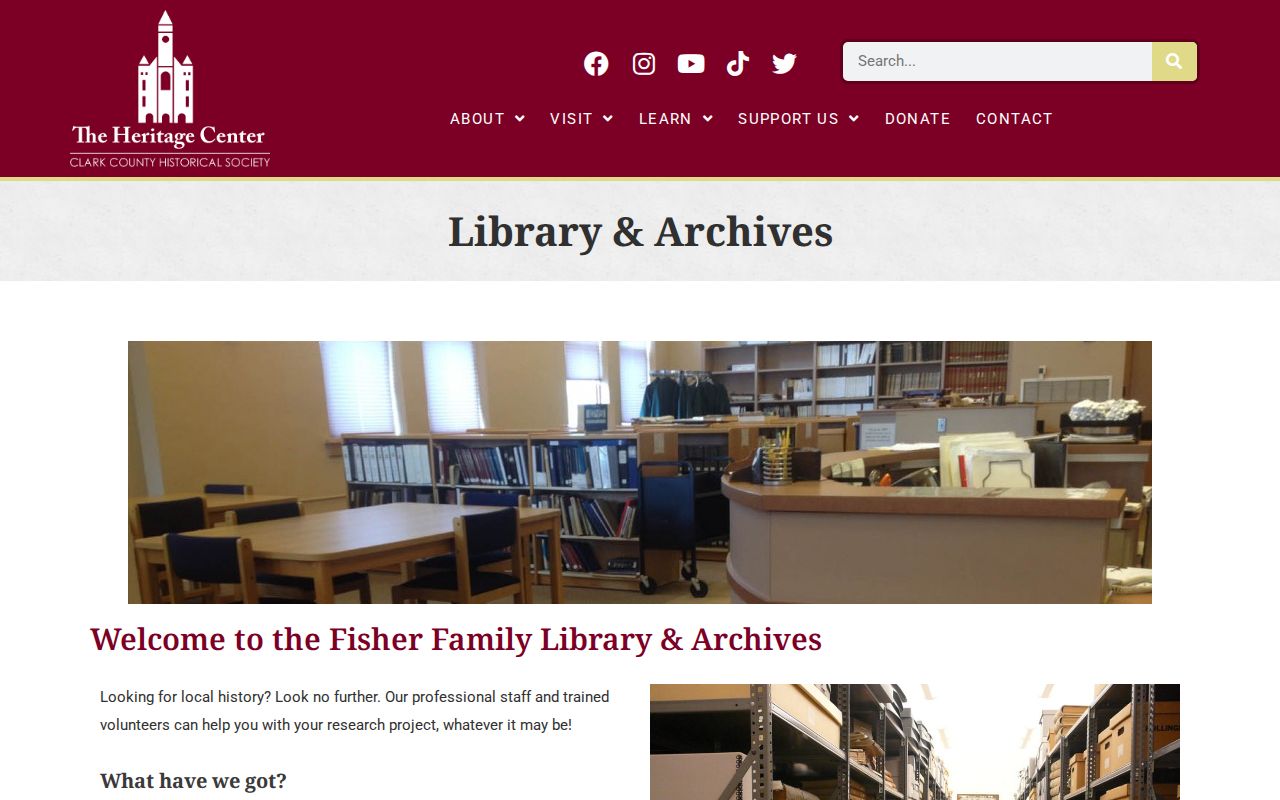
Its Springfield catalog can identify a box or category, but it does not promise that the item is scanned. Calling or emailing before a Springfield visit helps staff prepare material.
- 1852: Heritage Center identifies the first Springfield directory volume.
- 1901–1920: the Library District’s digitized PDF run is available remotely.
- 1976–present: CCPL lists Dickman Criss-Cross volumes after the selected earlier years.
- 2020: Heritage Center’s reported Springfield directory collection reaches this year.
Online Springfield City Directories
The Springfield-Greene County Library District has a distinct digital run from 1901 through 1920. These are large PDF volumes, not a complete digital substitute for the Springfield Heritage Center shelf. The collection description says the books can contain household names, occupations, addresses, businesses, and advertisements. Some editions also contain an alphabetical surname list and a separate alphabetical list by street and dwelling number. Check the selected Springfield volume itself before assuming the second list exists.
Open a close Springfield year on either side of the year of interest. A family may appear under a spelling variant, and a Springfield address may change as a street label changes. The digitized Springfield directory collection is the remote starting point, while its copyright rules explain why the online shelf ends well before the local holdings do.
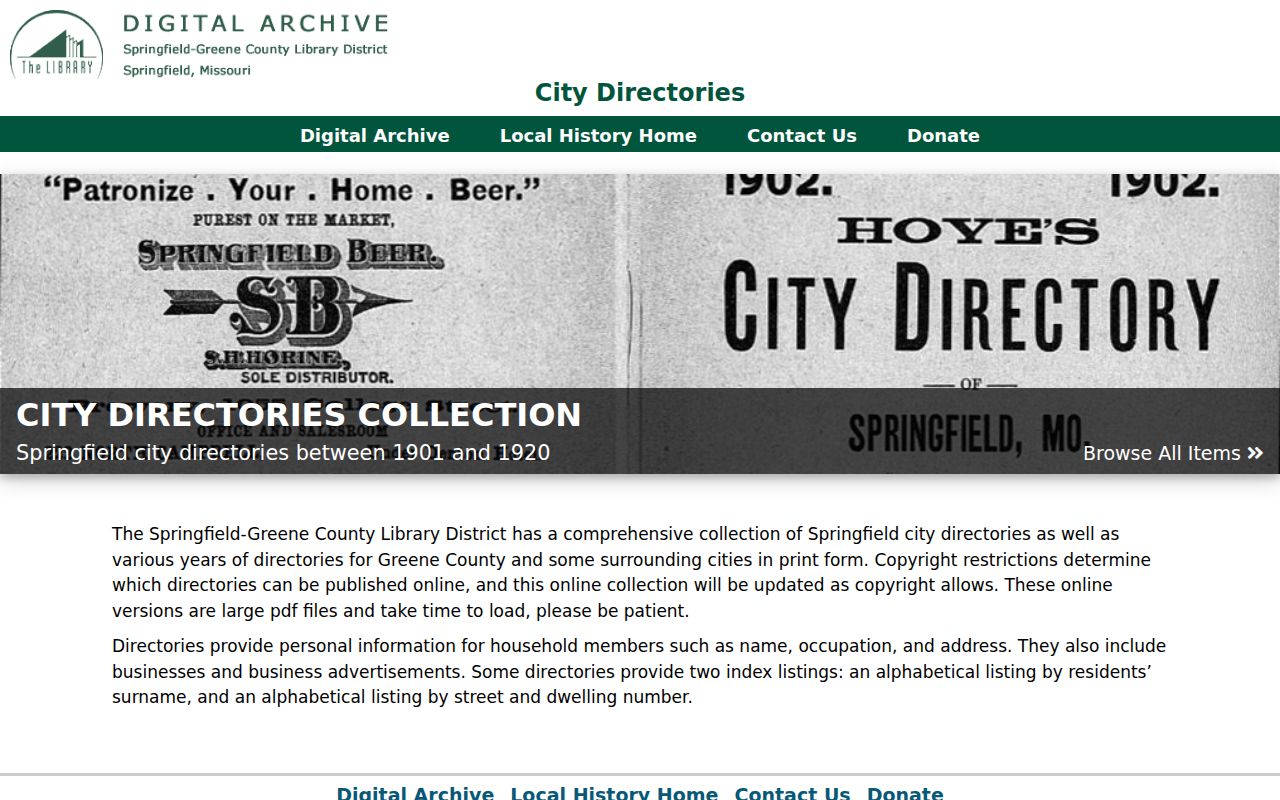
Use the PDF’s own index and page image together. A text search is helpful, but it can miss a faded scan, an abbreviation, or a surname rendered differently.
Springfield Directory Gaps at CCPL
Clark County Public Library lists Springfield directories in the nineteenth century and then from 1874 forward, but it specifically identifies missing issues for 1895, 1897, 1934, and 1951. Those absences are part of the record, not evidence that a person left town. A gap-aware search uses the nearest available volumes, then checks a census, deed, obituary, or estate source before deciding what changed.
The Springfield library’s local-history holdings also include census microfilm for Clark County from 1820 through 1930. Federal releases have reached 1950 under the 72-year rule, but CCPL’s stated local microfilm range stops at 1930. Two digital microfilm reader-scanners are first come, scanning to a personal USB is free, and prints cost $0.15 per page.
The CCPL microfilm page describes the genealogy holdings and the local access route.
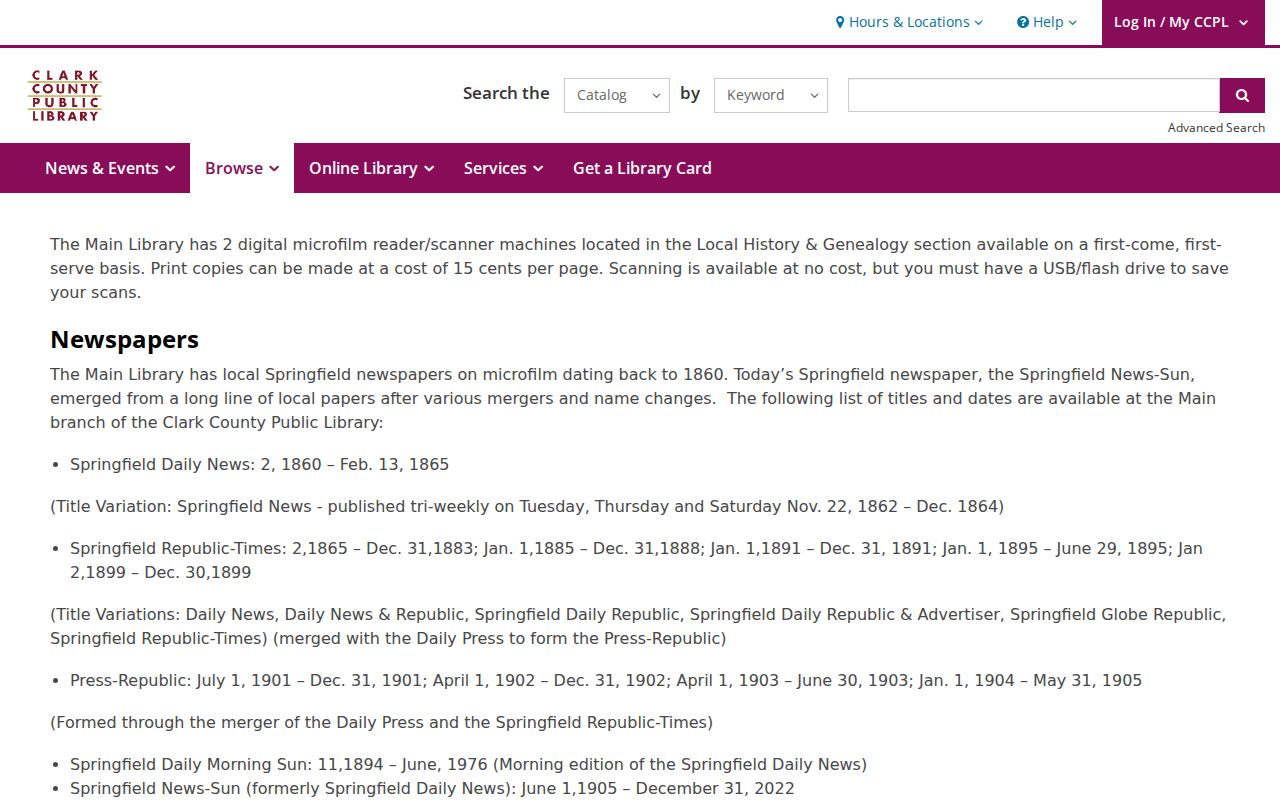
Census rolls are a household check, not a replacement for a directory. They can test whether the same surname and address trail is plausible between local editions.
Note: A missing directory issue or a missing name needs corroboration from another dated local record before it supports a family-history conclusion.
Springfield Directory Archive Access
Heritage Center is the offline fallback when a search reaches past the online PDFs. The Library & Archives are open Wednesday through Friday from 10 a.m. to 5 p.m. and Saturday from 10 a.m. to 3 p.m. The organization asks visitors to call or email for an appointment. It is at 117 S. Fountain Ave., Springfield, Ohio 45502, telephone 937-324-0657, with archives@heritagecenter.us for archive contact.
Its published terms distinguish research and reproduction from browsing a web database. Research is $20 per hour with a one-hour minimum. Document scans generally cost $0.25 per page, photo scans cost $2 per image or $4 per scan, and use fees may apply. Visitors may not use portable scanners or take their own photos. CCPL’s History/Genealogy Librarian, at 201 S. Fountain Ave., can perform core indexed lookups when given a person and date, but does not conduct in-depth genealogy.
The CCPL Digital Archives adds maps, photographs, company histories, church directories, programs, ephemera, and a local biography/history index.
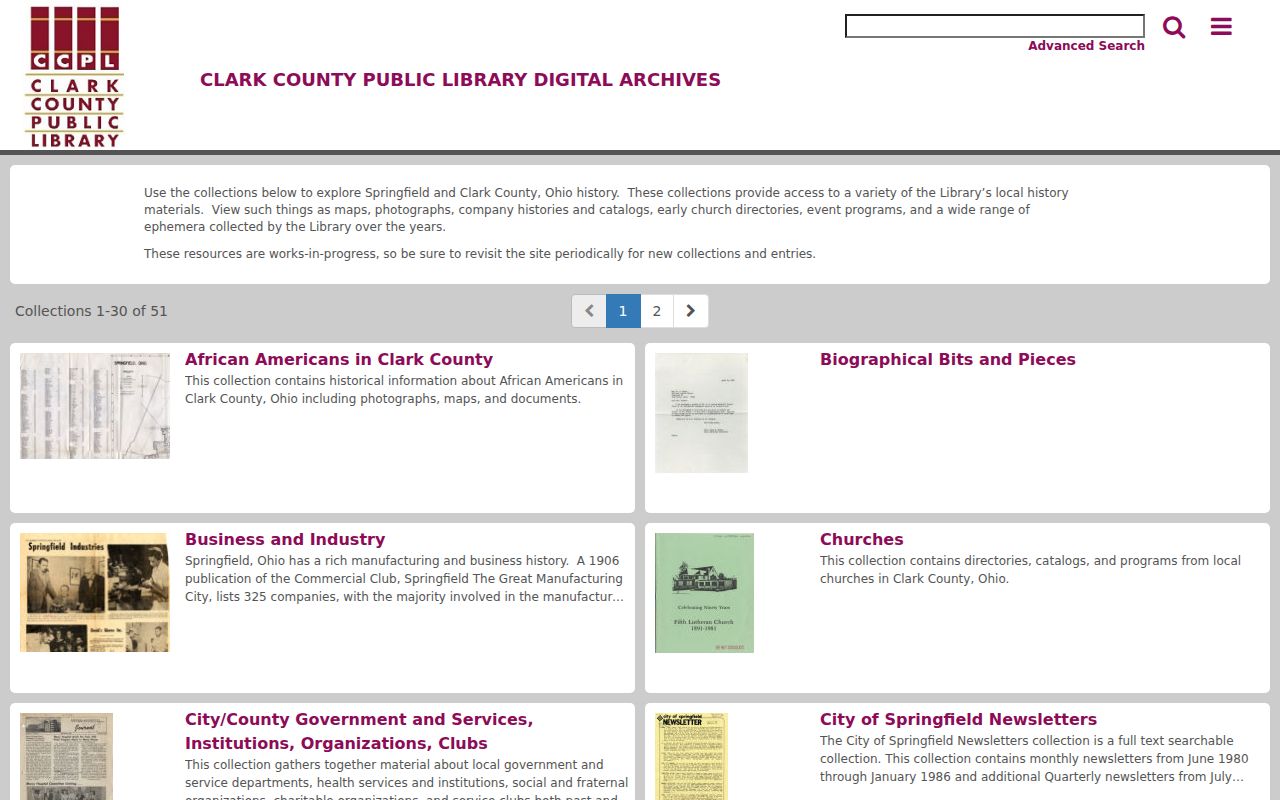
Those Springfield companion collections can clarify a neighborhood or institution. They are not a complete roster of everyone who lived in Springfield.
Reading a Springfield City Directory Entry
Start with what the collection description actually verifies. A selected entry can supply a name, occupation, and address, while businesses and advertisements may also appear in the book. Some volumes provide both a surname list and an address-oriented list. The collection description does not establish that every edition has a spouse notation, owner mark, widow notation, telephone number, or a particular abbreviation key, so treat those as volume-specific details.
| Name | Record the spelling exactly as printed, including initials and suffixes. |
|---|---|
| Occupation | Use it as a comparison field when two people share a surname. |
| Address | Record the house number and street exactly, then compare later editions. |
| Surname list | An alphabetical list, where present, begins a name-based search. |
| Street list | An alphabetical street-and-dwelling-number list, where present, can begin with an address. |
- Criss-cross directory
- A reverse directory arranged by street address, used to look for a listed name at a dwelling in an edition that includes it.
- Householder index
- An index that points from a name to a household listing. It may not include every person connected to the address.
- Abbreviation key
- A volume’s explanation of shortened terms. Read its preliminary pages before expanding a mark or initial.
Note: The page image, volume year, and list type should travel together in research notes, because an index alone omits context.
Springfield Directory Criss-Cross Volumes
Dickman Criss-Cross directories are the practical reverse-list layer for a Springfield address. CCPL identifies 1961, 1962, 1964, 1965, 1967–68, 1968–69, 1969–70, 1971, and 1976–present. The selected years matter. There is no basis for treating the shelf as an annual, uninterrupted address roster.
For an old Springfield house, find the street and number in a volume that has a reverse section, record the listed name, then move to the alphabetical section if present. Compare the closest prior and later available Springfield years. The backward address trail can then continue through a deed record or the Springfield previous-residents search when ownership history, rather than a directory listing, becomes the question.
Tracing Springfield Households by Year
A household trail should preserve several fields instead of relying on a single surname. Record the directory year, spelling, address, occupation, and whether the evidence came from a name or street list. Next, test the same details against the closest available volume. A changed address can mean a move, but it can also reflect a renamed street, an altered number, or a different person with the same surname.
- Find the first available listing near the period being researched and copy its year, name, address, and occupation.
- Check the next earlier and later volumes, keeping each address and occupation in separate notes.
- Use a reverse list only when that edition contains one, then record the listed household name at the address.
- Pair the local directory interval with the closest census record available through CCPL or the federal release.
- Use a Probate estate file, obituary, cemetery source, or recorded transfer to close an uncertain trail.
CCPL keeps a Springfield-paper obituary index from 1918 to the present and can supply up to five indexed requests, generally as PDFs, without charge. A directory disappearance may signal a move, a missed listing, a changed address, or an editorial choice. It is not a death finding by itself.
Springfield City Records Beside Directories
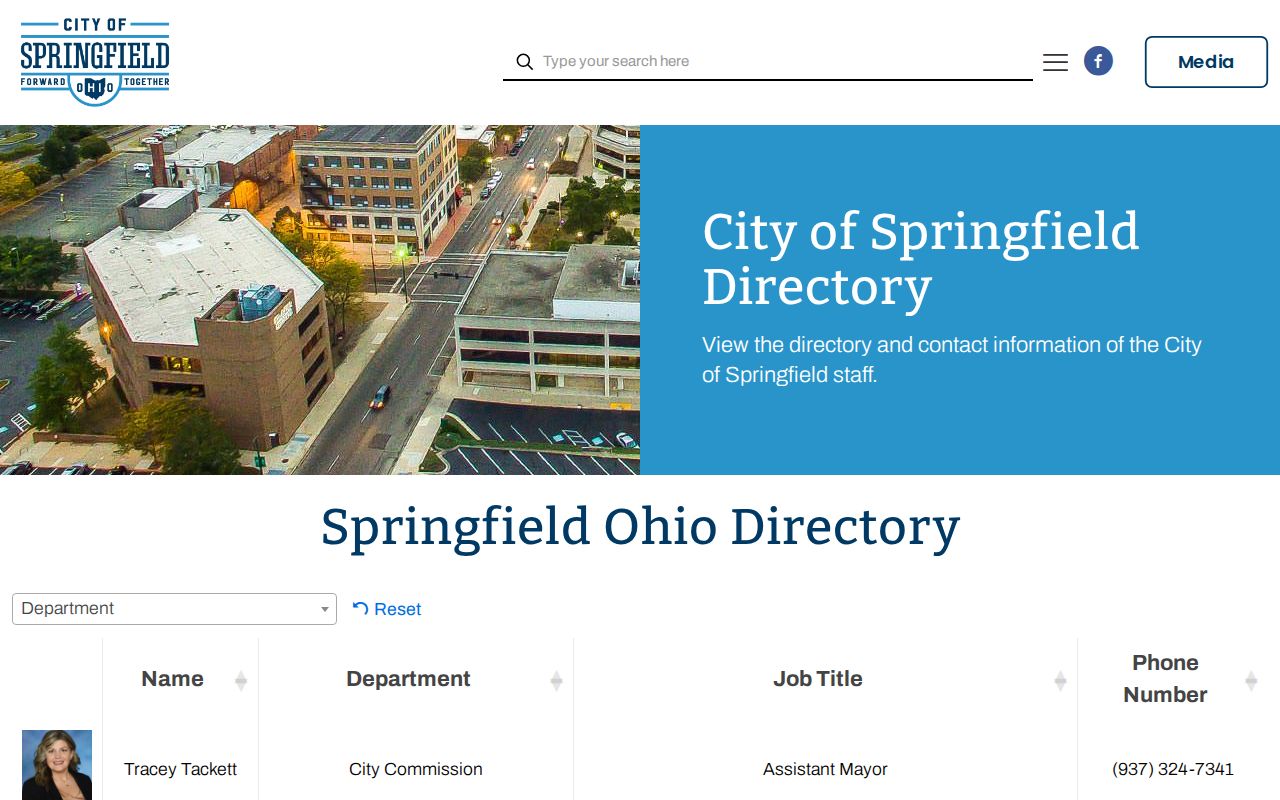
Two similarly named Springfield resources serve very different purposes. The City of Springfield’s staff directory lists public officials and office contact details, not private households. It can help identify the right Springfield office for a defined public-record request. The city’s directory has Name, Department, Title, and Phone Number fields, so it should never be mistaken for a historical resident source.
The official Springfield staff directory shows that office-contact function.
For a building history, city permit and zoning material can date a regulated project but does not identify everyone at an address.
Springfield’s Cityworks information page describes the current online permit and zoning application system.
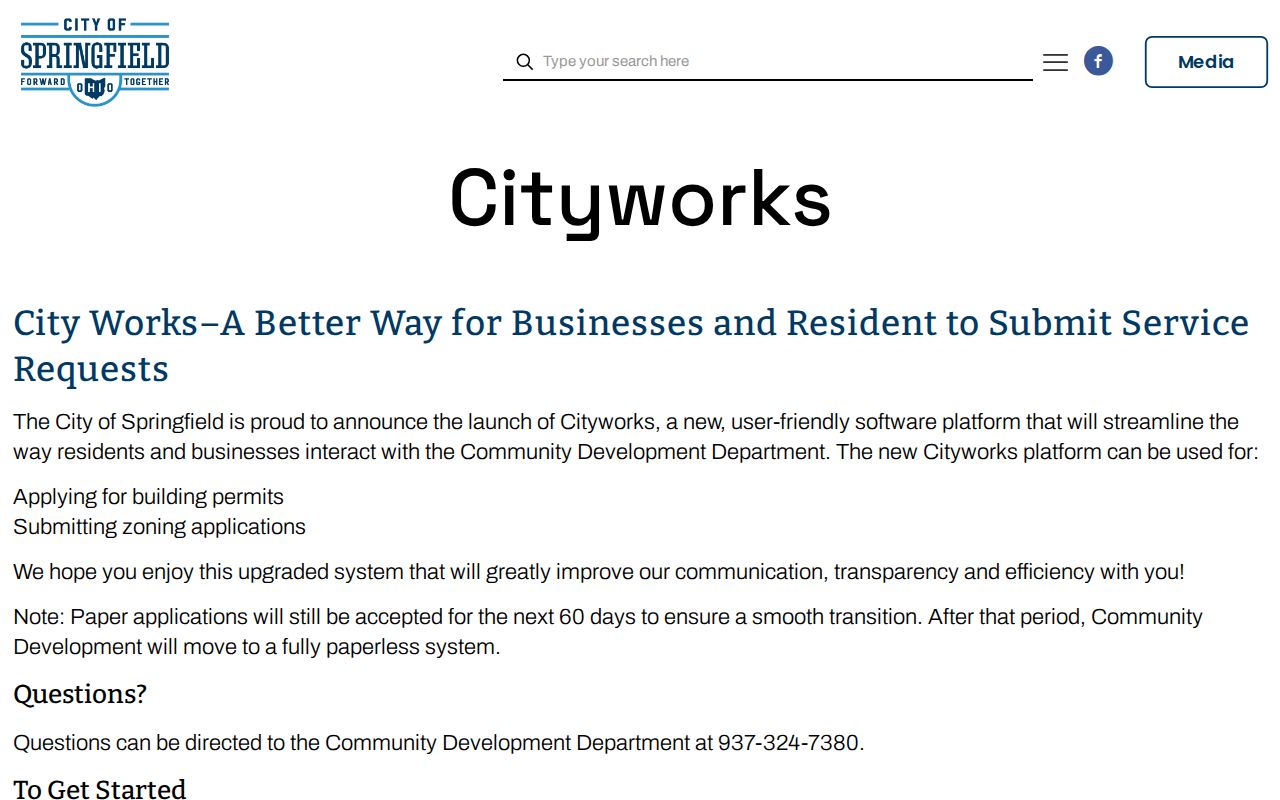
Historic or completed Springfield permit material is a defined city-record request because no public historical address-results interface was verified. Ask for a date span, address, permit number, or work type.
Former Springfield Street Names
An address search can fail because the street itself changed names. Heritage Center keeps a Springfield and Clark County street-name-change collection. Its 1961 compilation includes former-name references such as Yellow Springs Street and Plum, plus older Main and Champion references for Columbia Street. Those examples are bridges for historical research, not proof that every similar street name is the same location.
When a directory address does not match a modern map, use the archive’s street-name material with Clark County Tax Map road records, historic surveys, plats, and tax maps from 1880 through 2002. The Tax Map Department can help test the legal or map relationship before a name trail is joined to a present address.