
Springfield Resident Lookup Records
A Springfield resident lookup keeps ownership in one bin. Registration, court activity, life events, and credentials sit in separate bins. The answer depends on the question you bring. An Auditor result links an owner search, parcel, or address to a property record. A recorded instrument names the parties tied to that one document. A voter result confirms registration details only where they are publicly shown. No single result from any city directory or county source proves household membership. Nor does it show where a person lives today.
| Record | What It Confirms | Where | Access |
|---|---|---|---|
| Property record | A parcel returned for owner, address, or parcel criteria, plus location and legal context. | Clark County Auditor Property Search | Public search; mailing information is not occupancy proof. |
| Recorded instrument | A named party or document appears in the land-record index. | Clark County Recorder Official Record Search | Public index; earliest online coverage is not verified. |
| Voter record | A name and county return public voter and precinct information. | Ohio My Voter Information | First name, last name, and County are required; confidential records do not display. |
| Court or probate docket | A party is connected to a case and time period. | Clark County Clerk eServices | Docket-level data can lag; Common Pleas web records do not reach before 1990. |
| Vital event | A documented birth, death, or marriage event and its date band. | Clark County Combined Health District | Request channel and eligibility depend on the record and date. |
| Professional credential | Credential status, board, type, and listed city or state. | eLicense Ohio | Use minimal search data and confirm with the issuing board. |
Begin with the source closest to the fact you already hold. Property facts belong with the Auditor and Recorder. A case number belongs with its court division. A birth, marriage, or death date calls for the custodian of that period. Working this way keeps a Springfield resident lookup honest. Strangers who share only a name stay separate.
Verify a Springfield Resident Lookup
Verify one Springfield name with several independent fields. Names repeat, change, and appear in different legal roles. A parcel number and legal description anchor a record. They do it better than a mailing address ever can. Add a case number, event date, document number, or party role as a second anchor. When two records conflict, keep that conflict visible. Then ask the records office about inspection or copies.
- Write the name as known, including a former surname, middle initial, suffix, punctuation, and the period being checked.
- If there is an address or owner connection, use the Auditor result to preserve the parcel number and legal description rather than relying on the street display alone.
- Search Recorder parties by the relevant role and date range, then compare the instrument number or legal description with the parcel record.
- Use Ohio My Voter Information only for the named person in Clark County. A result is a confirmation lead, while no result calls for name variants or Board of Elections contact.
- When a court, Probate, or vital event is relevant, save the case context or event date and request verification from that custodian.
- Docket
- A court's running list of filed actions and entries in a case, not necessarily the whole case file.
- Index and image
- An index points to a record through searchable fields; an image is a view of the underlying document when the custodian makes it available.
- Certified copy
- A copy issued by the record custodian with its certification, used when an official copy rather than a search result is needed.
Note: A deed party may be an executor, trustee, or lender representative, so a name alone never proves a current personal connection.
Springfield Court Record Limits
Clark County keeps several court families under separate roofs. The Common Pleas Clerk handles civil, felony criminal, domestic-relations, and Second District appeal filings. Probate is its own court for estates, guardianships, marriage licenses, name changes, and trusts. Springfield Municipal Court is another local source entirely. Match the case type to its keeper first. Only then treat a docket hit as a resident lead.
The Common Pleas gateway reports docket entries the Clerk is required to keep. Updates run nightly, so a filing or judicial action can lag. Web records do not reach back before 1990. The Clerk publishes no fixed eServices field layout. So a Springfield resident lookup should not assume a specific name format or result column. Instead, preserve the case number, division, filing date, and party role. Then ask the Clerk for the applicable record route.
The docket inventory stays deliberately within what the county itself describes. A screen result is designed to supply:
- Court or division context.
- Docket or case context.
- Party-role context.
- Filing or action dates.
- Posted docket entries.
Clark County limits court access through its Legal Division page.
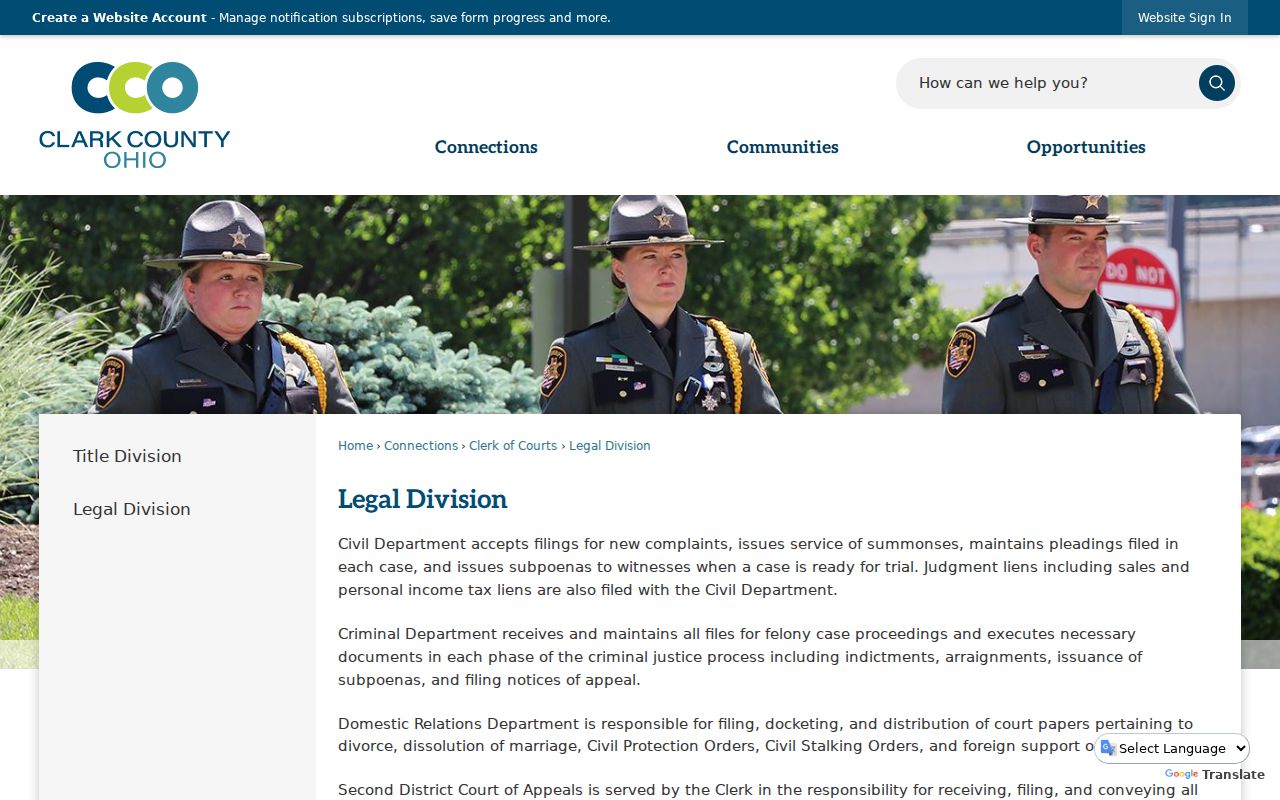
The image supports a verification step. It makes no claim that every court file or older docket is online.
A separate Clark County Clerk eServices page is the current web gateway for the Common Pleas docket information the county describes.
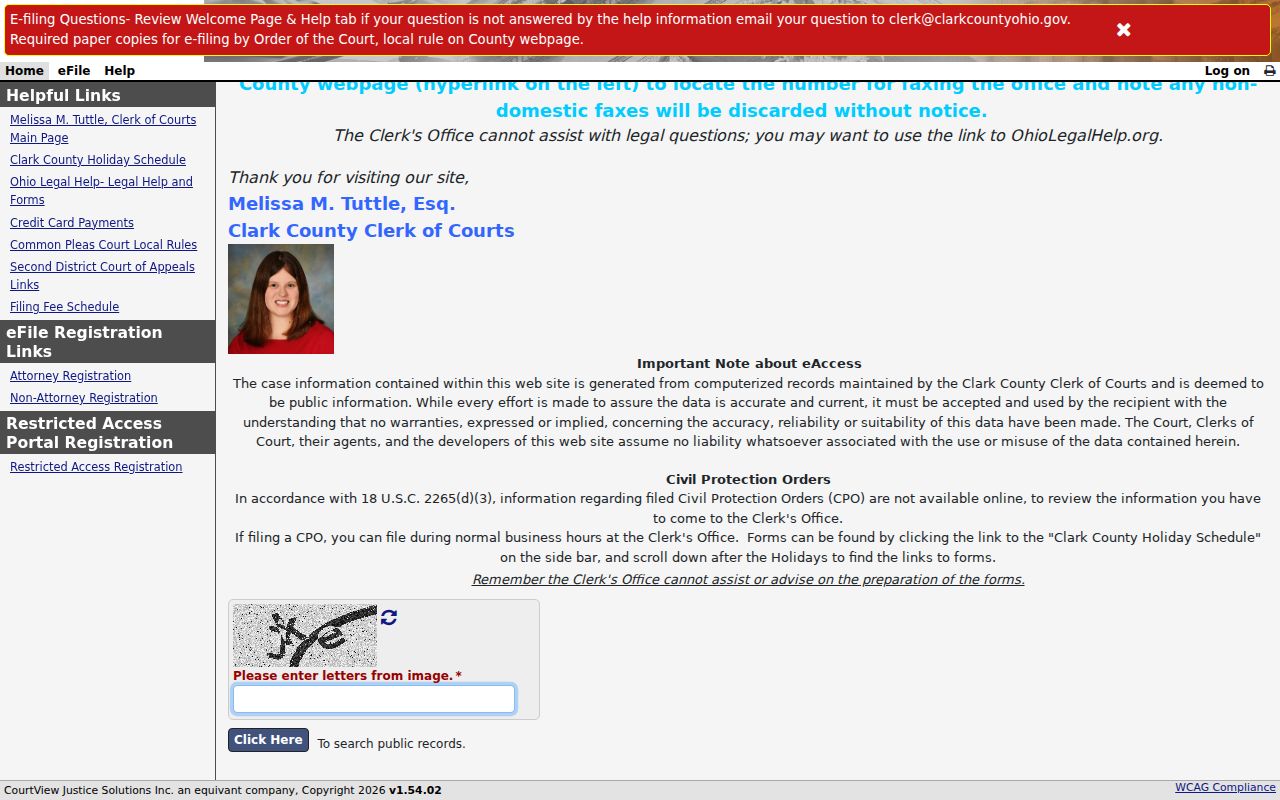
Use the portal for a current docket lead. Turn to the Clerk when you need a copy, an older record, or confirmation.
Springfield Voter and Custody Limits
Ohio My Voter Information is a named-person tool. It is not a way to browse Springfield residents by address. Its first form asks for First Name, Last Name, and County. Pick Clark County for any Springfield search. A Street Name selector may appear only after the first results stage. The search tips permit a first-name derivative, a former last name, or a previous Ohio address when appropriate.
| Field | How It Works |
|---|---|
| First Name | Required text field in the initial individual search. |
| Last Name | Required text field; a former surname may help resolve a historical record. |
| County | Required selection; choose Clark for the local search. |
| Street Name | Conditional selector that may appear after initial results, not a street-first search control. |
Ohio My Voter Information provides the official initial form for this narrow check. The Federal Bureau of Prisons Inmate Locator is a separate custody route with its own records and limits.
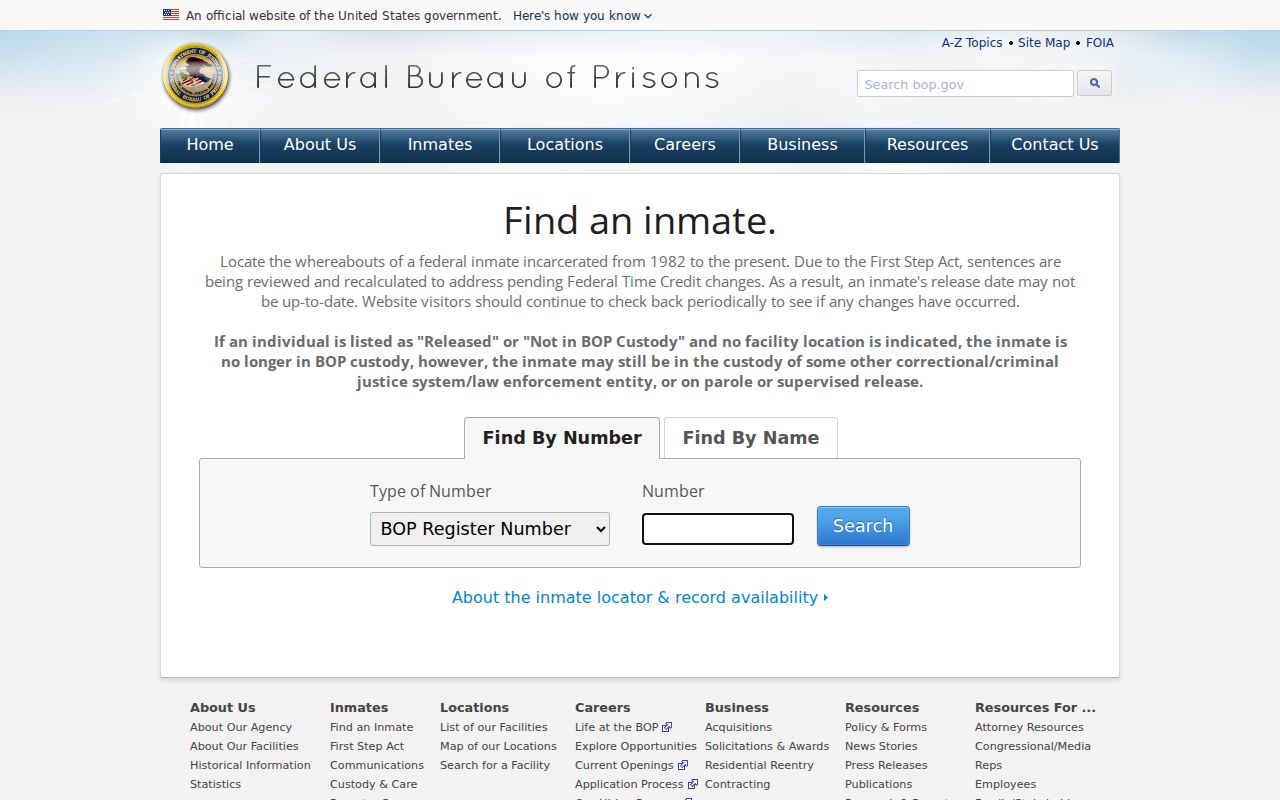
The pictured federal locator is a custody source with its own scope. It is not a Springfield resident lookup or an address-confirmation tool.
Springfield Vital Record Date Bands
Vital records build an event trail, not a present address. Clark County Probate keeps local birth and death registers covering 1867 through August 1908 for genealogy use. A single entry can record names, dates, places, parents, residences, and informant details. Coverage varies entry to entry. Probate lists a $6 historical research or copy route. Births after 1908 go elsewhere. The office points those to the Health District or the Ohio Department of Health.
The Combined Health District handles records from 1908 forward. It issues Ohio birth abstracts and Clark County death certificates through walk-in, online, mail, and genealogy channels. Certified copies cost $24 locally. Mail requests need the proper request form and a cashier's check or money order payable to CCCHD. When it can issue a certificate, the office mails it the next business day after receiving the request.
A complete local request lists the certificate type, the name on the record, the event information needed to locate it, requester information, the $24 fee, the mailing route, and the separate online order route. The PDFs do not print every blank or checkbox. Pull the live form instead of a copied field list.
Ohio sets no single closure clock for births and deaths. Under R.C. 3705.23, a registrar must issue a certified vital record to a signed applicant who pays the fee, unless an exception applies. Adoption-related original or replacement records can stay restricted. Social Security information on death certificates is withheld for the first five years unless an authorized requester proves identity. Follow the documented date band and request channel. Avoid inventing a broad public-search rule.
Springfield Probate Heir Trail
For documented estate research, Probate supplies a better path than a broad name search. A probate case can surface an estate context. It may also show a fiduciary, an executor, a next-of-kin category, or a recorded court trail. The court warns that its displayed computer information may lag filings or judicial action by a day or longer. Its accepted search fields are not published. So do not presume an online result holds every estate document or protected identifier.
Clark County Probate offers a counter, a written-request route, and a phone fallback. Genealogy and research questions go to the Probate Clerk. Estate records reach back on microfilm. Scanned images cover the later years. The earliest original files rest with the Historical Society. That sequence helps when a person may be tied to an estate. It is not proof of any private family relationship.
Springfield resident lookup work that turns into a past-address question belongs with the Springfield Directory Book. There, dated directory and archive collections supply the historical household layer.
Springfield License Lookup Boundaries
eLicense Ohio verifies credentials, not home addresses. It is not a resident-address roll. Official guidance says to enter minimal data: a last name with first initial plus Board, or an exact license number with its punctuation. A public detail can show status, board, license type and number, issue, effective, and expiration dates, city, state, specialized credential facts, and a board-action indicator. The issuing board remains the final verification source. A returned record carries a defined credential inventory:
- Status and sub-status, including compact or multistate eligibility where applicable.
- Board, license type, and license number.
- Issue, effective, and expiration dates.
- City, state, and country.
- Specialized credential information and a board-action indicator.
The Ohio attorney directory is another official credential route. Optional fields include registration number, name, city, state, county, ZIP, and language. Its warning is blunt: inclusion alone does not establish good standing.
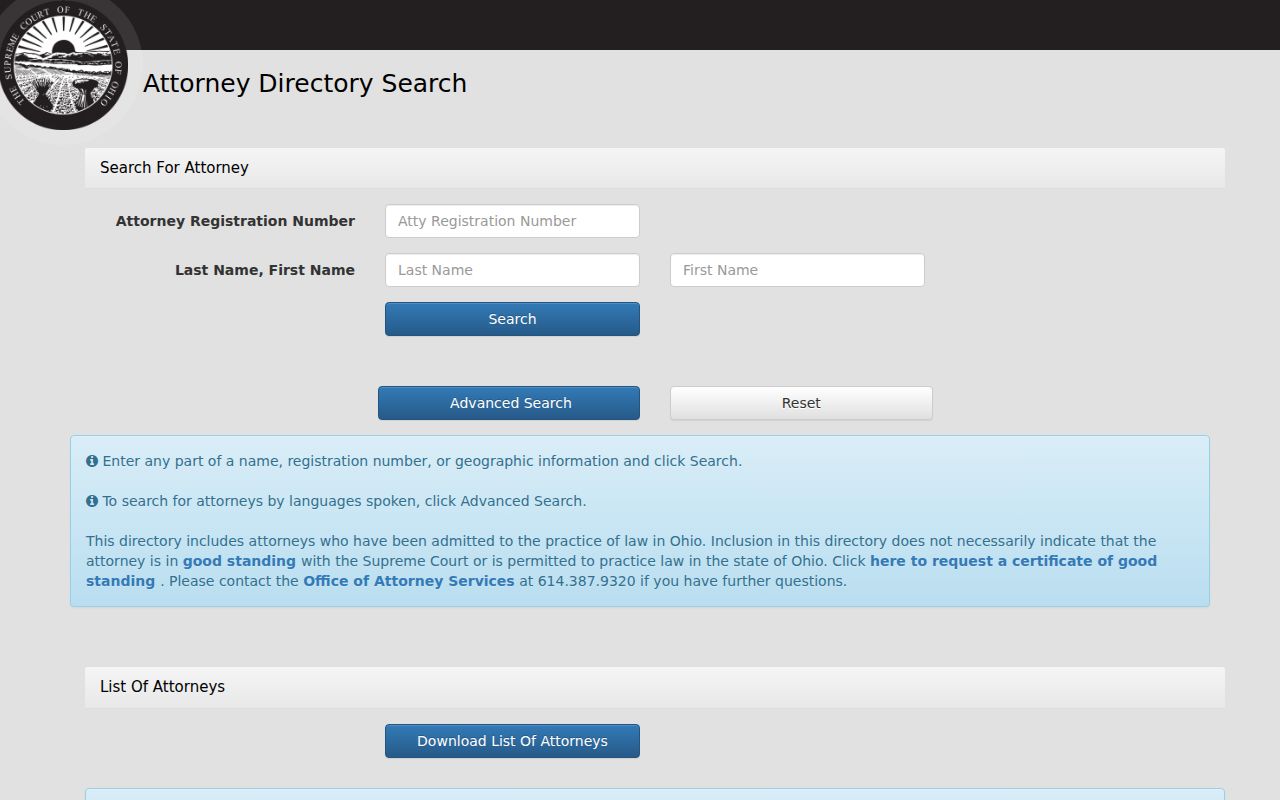
A credential hit is not a residence. It establishes a regulated or service connection, never a person's home at a Springfield address.
Springfield Resident Lookup Gaps
A missing result usually has a plain cause. The Common Pleas web system stops before 1990. The Recorder publishes no first online-index year. The voter system wants a name and county, not an address. Protected records can be absent by law. A historical directory may hold a gap or a former street name. Check name variants, time period, and the right custodian first. Only then decide a Springfield resident lookup has failed.
When a record sits behind no screen at all, the Ohio Public Records Act, R.C. 149.43, supplies the general public-records framework. A targeted request should name the record family, the known name variants, an approximate date, the office, and whether inspection or copies are wanted. Courts run their own access rules. Libraries, microfilm, and the Heritage Center serve as documented historical fallbacks.
Note: A blank result can reflect a digitization boundary, a protected record, a spelling variation, or a different court division.
Lawful Springfield Resident Lookup Limits
The Safe at Home program shields eligible participants' residential addresses. It keeps them out of public voter-list, pollbook, and signature-list data. It serves eligible people who fear for their safety because of specified violence, stalking, or trafficking. It can also support a confidentiality notice to the Recorder when a participant acquires real property. Other limits shield identifiers and motor-vehicle information. Renters, household members, and utility accounts cannot be reconstructed from the public sources used here. The same goes for protected addresses.
The Safe at Home program explains the official address-confidentiality route. A person may also seek online redaction of specified identifiers under the state redaction statute. That process is not a universal address-removal rule.
Lawful use. Use Springfield resident lookup records for personal, lawful research, family history, estate documentation, or civic questions. Do not use any result to stalk, harass, intimidate, or harm another person.