
Finding Springfield Residents by Record
Springfield residents are not maintained in one public master roll. Clark County property data can connect an address with a parcel and an owner field. The Recorder can connect an instrument with named parties and a legal description. Ohio's voter lookup is an individual name-and-county check, while historical directories can place a listed householder at an address in a particular year. Those are different claims. A tax mailing address is correspondence information, not proof that a person occupies the property. A recorded deed shows parties to a transaction, not every person in a household.
Start with the record that matches the question. A one-person Springfield search is best when one name needs careful confirmation. An address-led question belongs with the Auditor and Recorder first. For a household from an earlier period, the library and archive collections often provide a better starting point than a current database. Keep the document number, parcel number, date, or directory year as you move between offices. These fixed details help separate people with the same name.
- Use the Auditor when an address, parcel, or likely owner connection is known.
- Save the parcel number and legal description before opening recorded land documents.
- Check Ohio My Voter Information with the person's first name, last name, and Clark County.
- Use the Recorder's party and date filters for an instrument trail, then compare document details.
- For an older household, consult a directory, microfilm, archive, or a focused public-records request.
Note: A blank search can reflect a protected record, an index gap, a name variant, or the wrong custodian.
Springfield Resident Records Offices
Several Clark County offices sit in Springfield, but each holds a different part of the record trail. The Auditor maintains the parcel and property-search starting point. The Recorder indexes real-property instruments. The Clerk and Probate Court handle distinct court records, while the Combined Health District issues certain vital copies. The county public-records hub is a useful office map, not a promise that each listed source contains a current address. For a full address-led sequence, use the Springfield street directory path.
Ohio's Public Records Act, R.C. 149.43, is the fallback when an administrative record is not online. Inspection should be prompt, and copies should be supplied within a reasonable period, subject to exemptions and actual copying costs. A focused request that names the record, date span, and office is more useful than asking for a broad list of people. If an office withholds or redacts material, ask for the legal basis and for any separable public portion.
Clark County Auditor
Parcel and property records
31 N. Limestone St., Springfield, OH 45502
937-521-1860
Ohio Secretary of State
Voter status and precinct lookup
Statewide official service
Use the online form
Springfield Parcel Clues Before Names
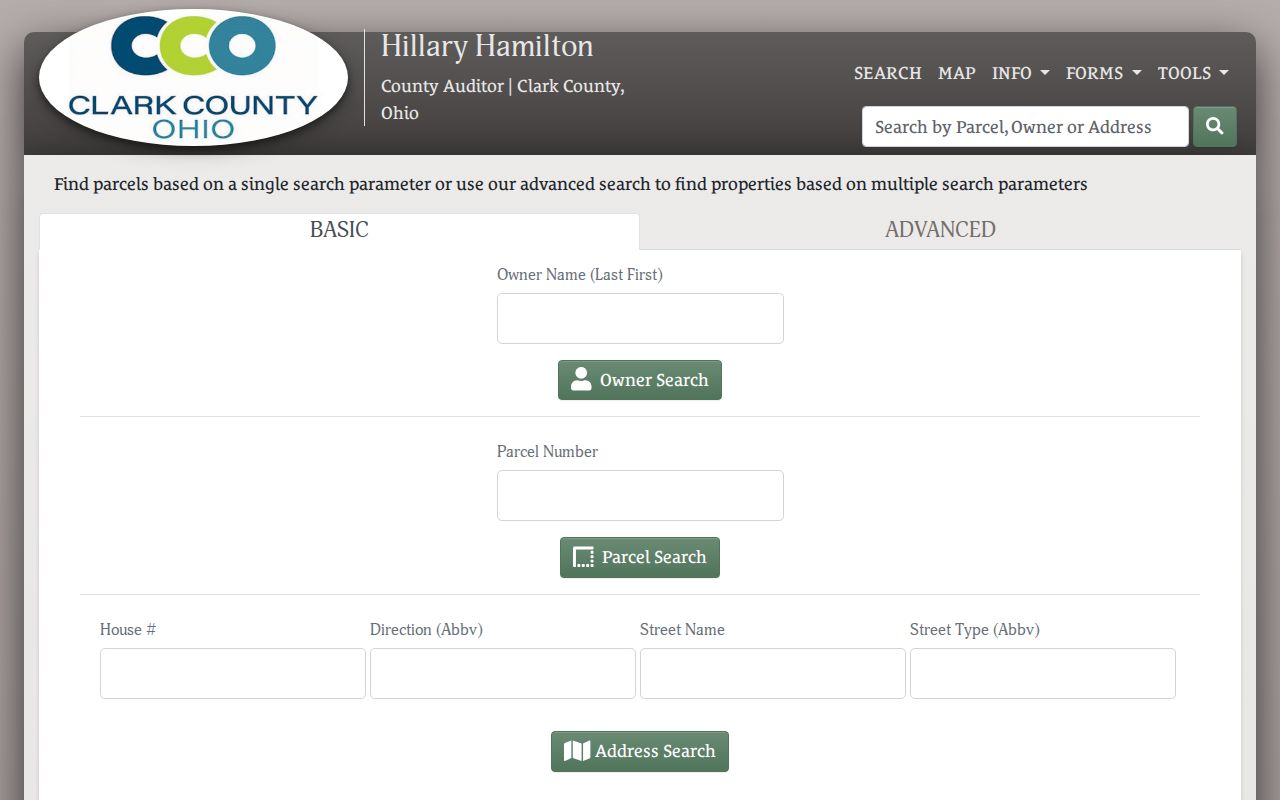
The Clark County Auditor Property Search accepts a parcel, owner, or address search. Its advanced form can also narrow by house number, direction abbreviation, street name, street type, sale range, buyer or seller, City or Township, school district, neighborhood, subdivision, legal description, acreage, and physical characteristics. It has no verified ZIP filter. That makes it a strong address-to-parcel tool, not a ZIP-wide resident list.
A parcel card separates several kinds of information. The recorded property location is the situs address. A tax mailing field, when shown, tells where correspondence is sent. The legal description is the durable lot, block, subdivision, or survey language that can bridge a renamed street. The property detail pattern also has valuation, ownership, residential, permit, sales, land, tax, and map categories. Read an owner or mailing field as a record lead, then confirm the question with the custodian.
| Auditor field | Use in a Springfield search | Format note |
|---|---|---|
| Owner Name | Find a parcel tied to an owner field | Visible format: Last First |
| House #, Direction, Street Name, Street Type | Build a site-address search | Direction and type expect abbreviations |
| Parcel Number | Return to a known parcel | Use the parcel search control |
| City/Township, Neighborhood, Subdivision | Narrow a property area | Options load dynamically |
| Legal Description | Compare property and deed geography | Use it as a research bridge |
The Auditor search screen is shown below. Its controls make clear why an address search should be recorded as a parcel trail before it is treated as evidence about a resident.
Use the parcel result to document the property connection, then move to the Recorder for recorded instruments.
Springfield Deed Parties and OCR Trails
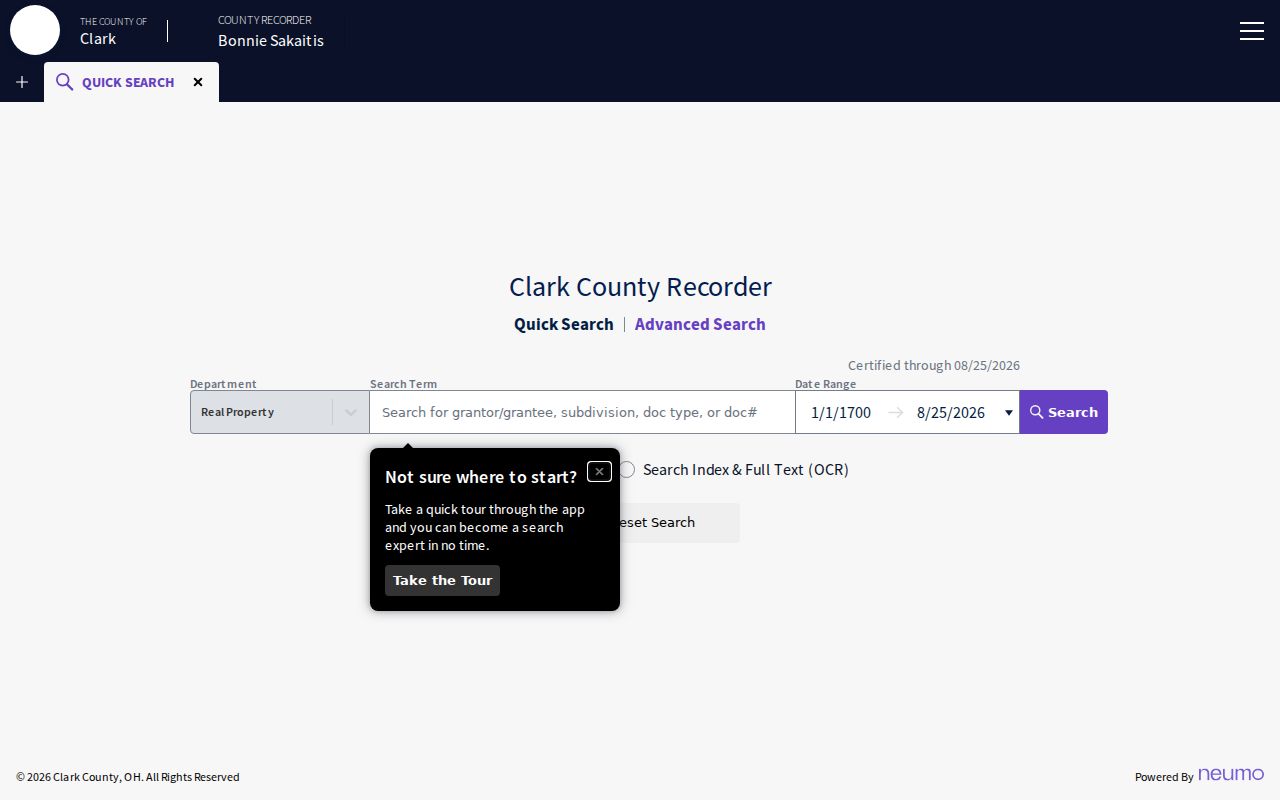
The Clark County Recorder Official Record Search is a real-property index, not a residents directory. Quick Search accepts a term for a grantor, grantee, subdivision, document type, or document number. The advanced search adds Party Names, separate Grantor and Grantee fields, recorded and executed date ranges, document types, document-number modes, book, volume, page, and full-document OCR text. The site displayed a current certified-through date, but the research did not establish an earliest online year or copy fee.
Use index-only search for broader word matching. The Recorder says multiple words are searched individually in index-only scope, while the full-text OCR option treats them as a phrase. A current parcel's legal description and likely transfer date are better starting details than a street name alone. Capture the grantor, grantee, recording date, document number, and legal description. Then search the prior party or description to trace an earlier instrument. Ask the Recorder where older books, plats, or images can be consulted if the online index stops.
The Recorder quick-search screen shows the distinction between index and OCR scope.
An instrument is evidence of a recorded transaction or filing, not evidence of all current occupants.
Ohio Voter Records for Springfield Names
Ohio My Voter Information is the official individual lookup. The visible form requires first name, last name, and county. Use Clark County only after checking spelling, a former surname, middle initial, suffix, and time period. A public result can help confirm registration and precinct information for the named person. It does not provide a street-first browse of Springfield residents.
Ohio voter materials are public with enumerated redactions under R.C. 3503.13. Safe at Home participants and other protected registrations may be confidential. A non-result is therefore not a conclusion about a person's identity or location. For a lawful records question that the public form cannot answer, the Board of Elections is the proper custodian. Do not use a property or voter result to infer household membership.
Current Springfield Resident Directories
Current Springfield resident records are purpose-built indexes, not interchangeable lists. A property search is useful when a parcel or owner connection is known. The voter form checks one named registrant. The Recorder identifies parties to land instruments. A court record may show a party's connection to a case at a date, while an official staff directory lists public employees, not private residents. Each source should be read within its own time and legal boundary.
| Source | Who It Lists | Keeper | Access |
|---|---|---|---|
| Auditor parcel search | Parcel and owner fields | Clark County Auditor | Public portal |
| My Voter Information | Named registered voter where public | Ohio Secretary of State | First name, last name, county |
| Recorder index | Parties to recorded instruments | Clark County Recorder | Public index; access features may vary |
| City staff directory | Public city staff contacts | City of Springfield | Free online |
| Community organizations | Public organization contacts | City and civic groups | Not a private-member roster |
Use a property record for property facts, a voter record for named registration information, and the Recorder for instrument history. Compare several independent fields rather than treating a match on one name as identity proof.
Springfield Court and Probate Name Trails
Clark County has separate Common Pleas, Probate, and Municipal Court channels. The Clerk eServices gateway provides Common Pleas docket access that is updated nightly, but the county says web records before 1990 are unavailable and online information can lag filings. Probate CaseLook also warns that postings may lag. Save the division, case number, party role, and date, then contact the appropriate clerk to verify a filing or seek a copy.
Municipal Court electronic records begin January 1, 1990. Probate handles estates, guardianships, marriage licenses, name changes, and related matters, while Common Pleas has civil, felony-criminal, and domestic-relations divisions. A case is a time-bound connection to a court matter, not a current-address result. Older material may require a counter inquiry, a clerk request, microfilm, or an archive search.
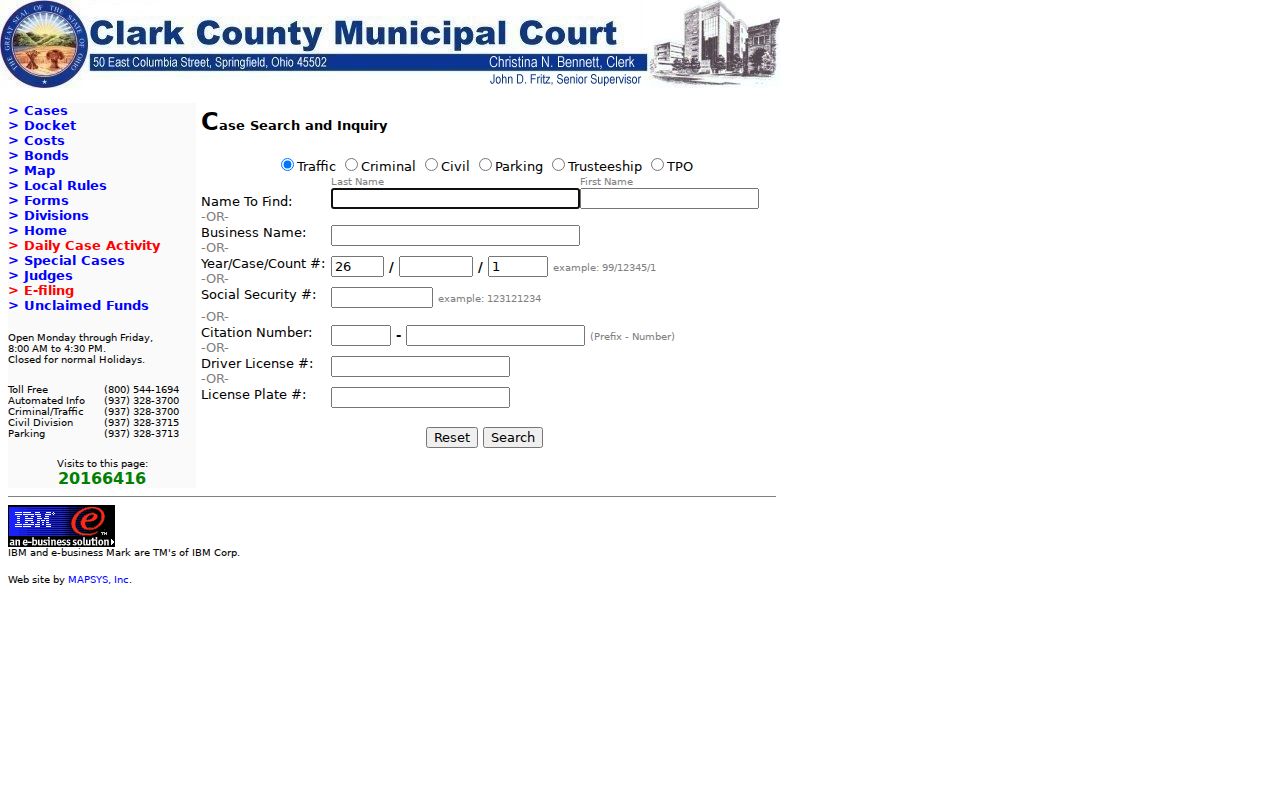
The Springfield Municipal Court case-search page is pictured here and is one local court access route.
Court portals are best used to preserve a documented case lead for confirmation with the court.
Note: Juvenile, adoption, sealed, expunged, and protected court material may be unavailable or redacted.
Springfield Vital Record Time Bands
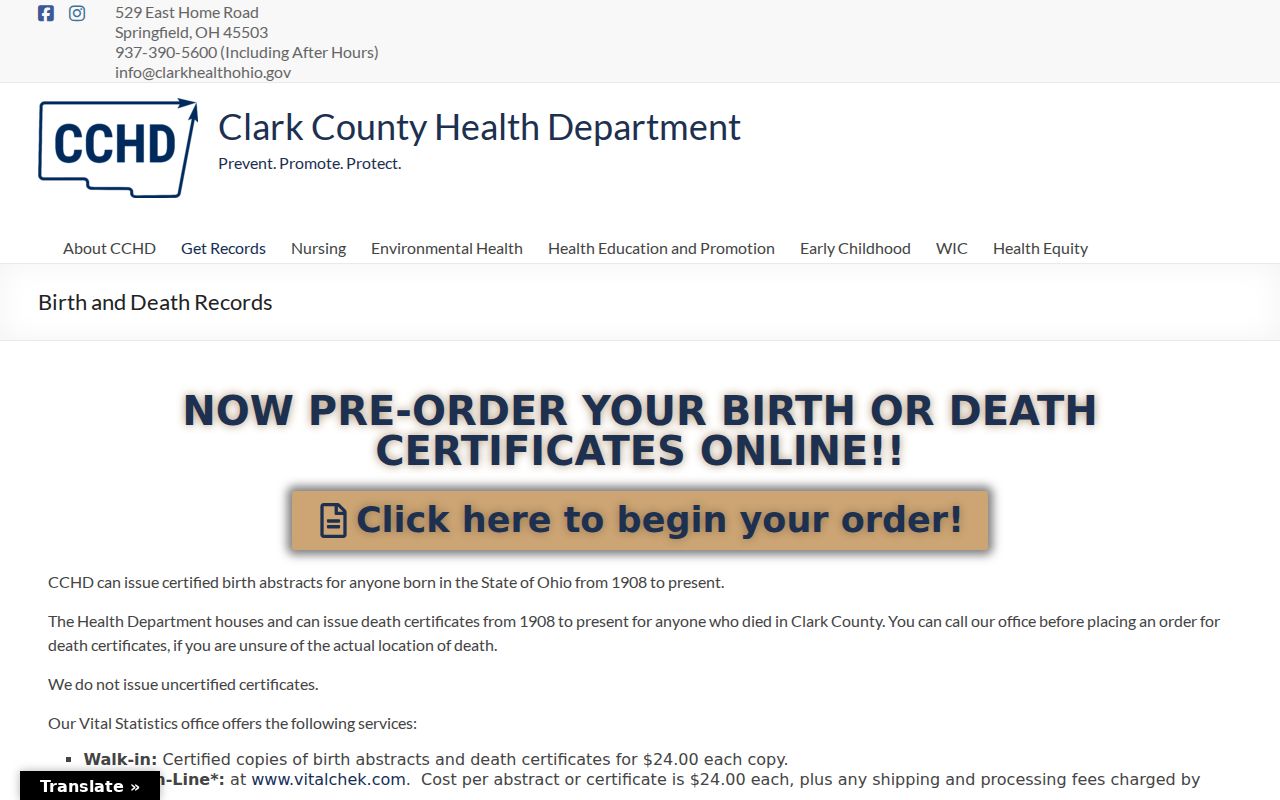
Vital records can support family history or estate research, but they are not a current resident roll. Clark County Probate's genealogy material covers local birth and death registers from 1867 through August 1908. The Combined Health District issues Ohio birth abstracts from 1908 onward and Clark County death certificates from 1908 onward. It offers walk-in, online, mail, and genealogy-information channels, with a verified local certified-copy fee of $24. Probate retains local older material and marriage records.
Ohio does not use a general 100-year birth and 50-year death closure rule. R.C. 3705.23 directs the registrar to issue a certified copy to a signed, fee-paying applicant unless an exception applies. Adoption records and death-certificate Social Security information carry particular restrictions. Match the event date to the local custodian, and ask for the precise request form or research channel rather than assuming an online search can disclose the record.
The Combined Health District's vital-record page shows the current request options.
The form route connects a documented event to the correct office, subject to Ohio's access rules.
Historical Springfield Resident Directories
For past Springfield residents, the local directory shelf is unusually long. Heritage Center reports Springfield city directories from 1852 through 2020. The Springfield-Greene County Library District's digital directory collection makes 1901 through 1920 volumes available as large PDFs, subject to copyright limits. Some directory volumes carry both a surname list and a street-and-dwelling-number list. That address list is the criss-cross function, but it is not present in every year.
Clark County Public Library adds city and rural directories, telephone books, census microfilm, deed and mortgage microfilm, marriage records, newspapers, and Dickman Criss-Cross volumes for selected years. A directory entry can place a listed person at an address and may include an occupation, but it is evidence for that edition's period. It does not prove a later move, death, or current residence. The full collection-by-collection method is on the Springfield city directory page.
The Clark County public-records hub is pictured here and helps route a historical question to the office, library, or archive that holds it.
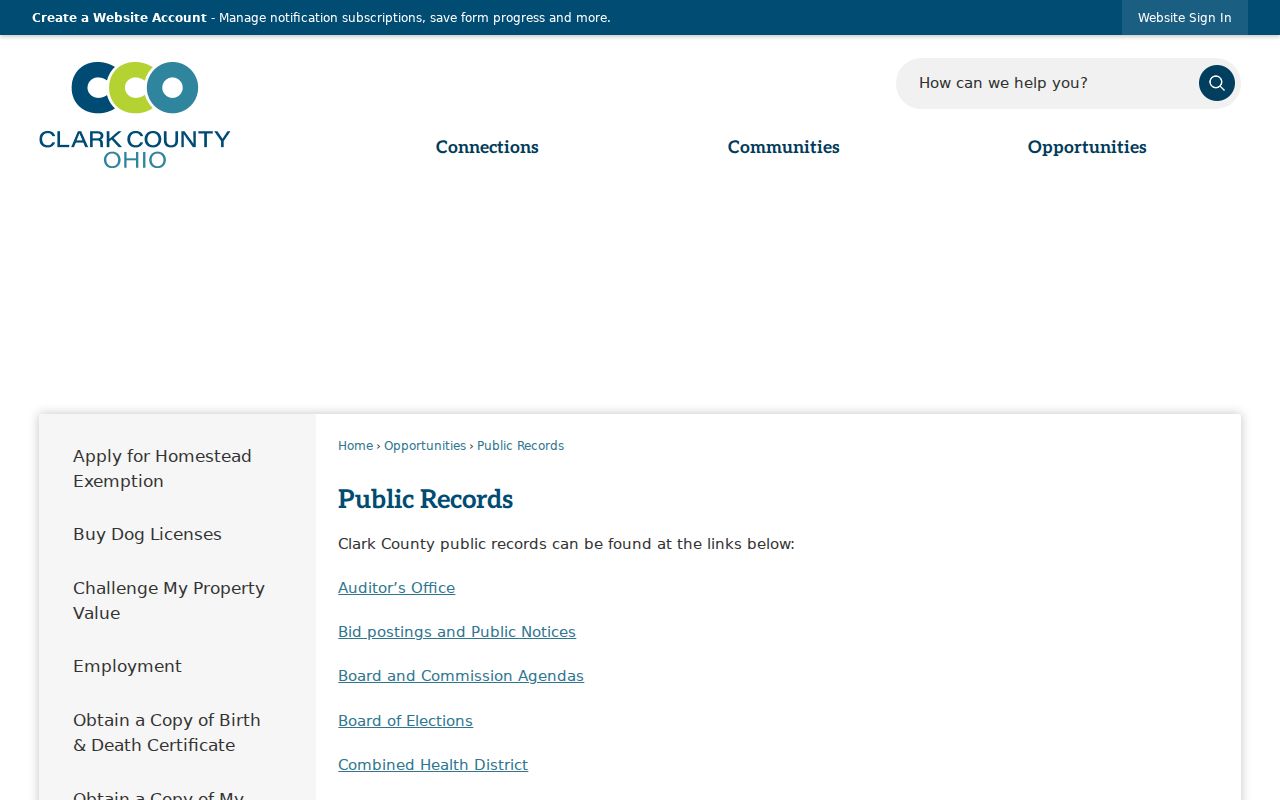
The historical shelf itself is reached through the library's digital collection or an archive appointment.
Springfield Record Terms That Matter
Local records use terms that look similar but answer different questions. Keeping the terms apart prevents a mailing address or name match from becoming a mistaken residency conclusion.
- Parcel
- A county property unit used to organize tax, map, and assessment records.
- Index
- A finding tool that points to a record, rather than the complete record itself.
- Criss-cross directory
- An address-oriented directory list that may connect a dwelling number with a listed householder for one edition.
- Legal description
- Recorded land language that identifies property more durably than a changing street label.
Tax Map staff keep archived tax maps from 1880 through 2002, historical surveys, road records, plats, and deed-transfer review material. These are useful when a former street name or a shifted address must be linked to a parcel description. They are not a substitute for a legal survey.
Springfield Offline Research Counters
Online records have real stopping points. Common Pleas web records do not reach before 1990. The Recorder's inspected portal did not publish an earliest online index year. Digitized city directories cover only 1901 through 1920. When a search stops, the fallback chain is specific: contact the Clerk or Recorder, use the Tax Map office, consult Clark County Public Library microfilm, or arrange Heritage Center research. Heritage Center is open Wednesday through Friday from 10 a.m. to 5 p.m. and Saturday from 10 a.m. to 3 p.m., with appointment guidance.
Library staff can perform core indexed lookups when given a person and date, though they do not provide in-depth genealogy. Its obituary index covers Springfield papers from 1918 to the present and allows up to five indexed requests, generally as PDFs, without charge. The library's reader-scanners are first come, with free personal-USB scanning and a listed print cost. Those channels preserve the difference between a documented historical search and a speculative name match.
Springfield Map Updates and Legal Lines
March 2026 county material describes shared City and County GIS infrastructure through 2030. It is a useful access development, but county material also cautions that parcel lines are approximate while GIS is updated. Use a map for orientation. Verify a legal boundary with the Tax Map office, a survey, or a recorded plat. That distinction matters when tracing a property near a city edge or translating an old street label.
The eLicense Ohio public lookup is another example of a limited official name source. It can show credential status and location fields, but a license city is not a street address and the state says the result should not be the sole basis for detrimental reliance.
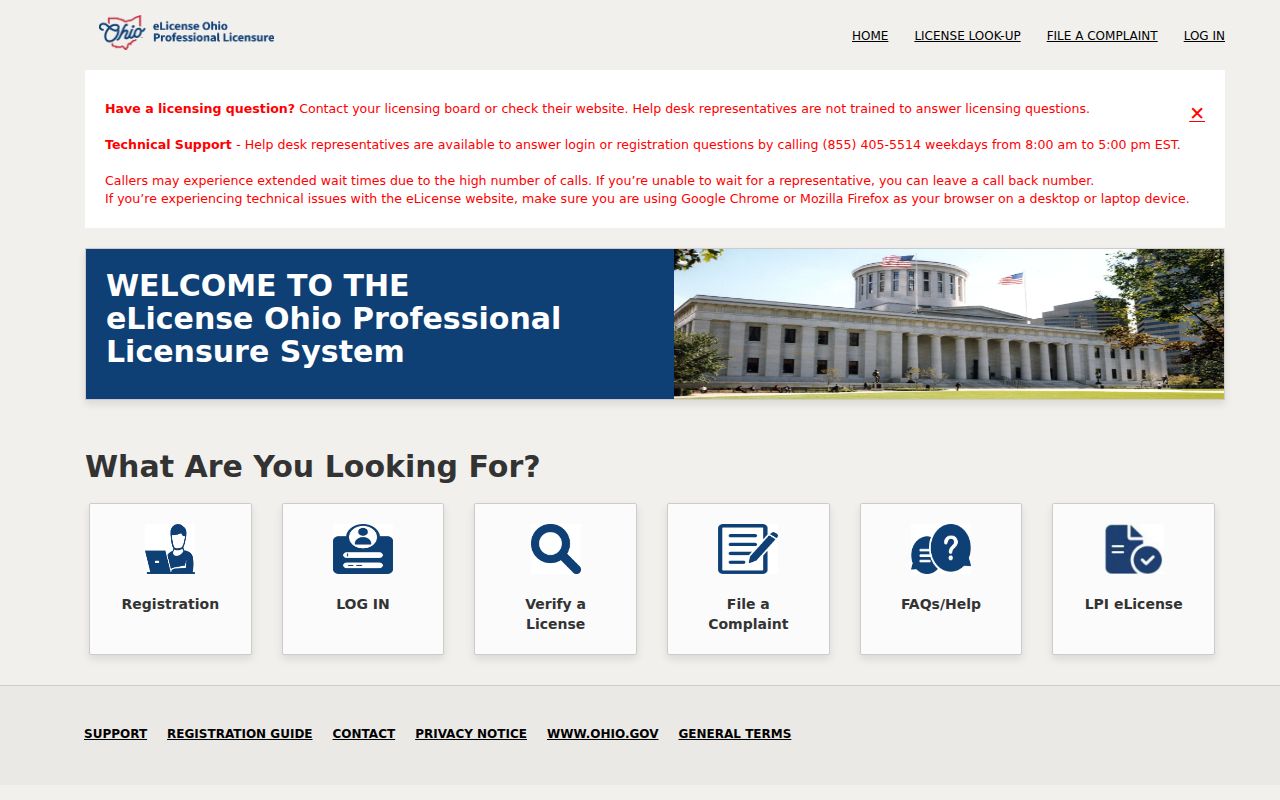
Use a credential result as an association to verify with the licensing board, not as a resident-location claim.
Limits on Springfield Resident Results
Official sources have a clearer custodian, record date, and correction path than commercial people-finding tools, but neither should be treated as complete. Public sources can contain an old filing, an owner rather than an occupant, a partial name, or a protected omission. Commercial compilations can combine material with unclear timing. For an error in an official record, contact the originating office: the Auditor for parcel data, the Recorder for an instrument question, the Board for voter registration, or the court clerk for docket access.
| Question | Official record route | Commercial compilation category |
|---|---|---|
| Who keeps the source? | A named Auditor, Recorder, court, library, or state custodian. | The underlying mix and update process may be unclear. |
| What does a result mean? | A record-specific fact, such as a parcel, filing, or directory entry. | A lead that can combine older public and proprietary information. |
| How is an error handled? | Ask the originating custodian about correction or clarification. | Use the provider's own removal or correction process. |
Lawful personal use. Springfield records can support family history, estate documentation, civic research, and property curiosity. Do not use any result to stalk, harass, intimidate, or harm a person.
The Recorder's free Property Alert can notify an account holder of matching real-property filings, but the Recorder says it does not guarantee completeness, fraud detection, accuracy, or title status. Verify a suspicious filing directly with the Recorder.
Ohio DRC Offender Search is a separate public-safety tool, limited to specified custody and supervision records. Its residential information can be a last recorded address rather than a current location, so it is not part of an ordinary Springfield resident search.
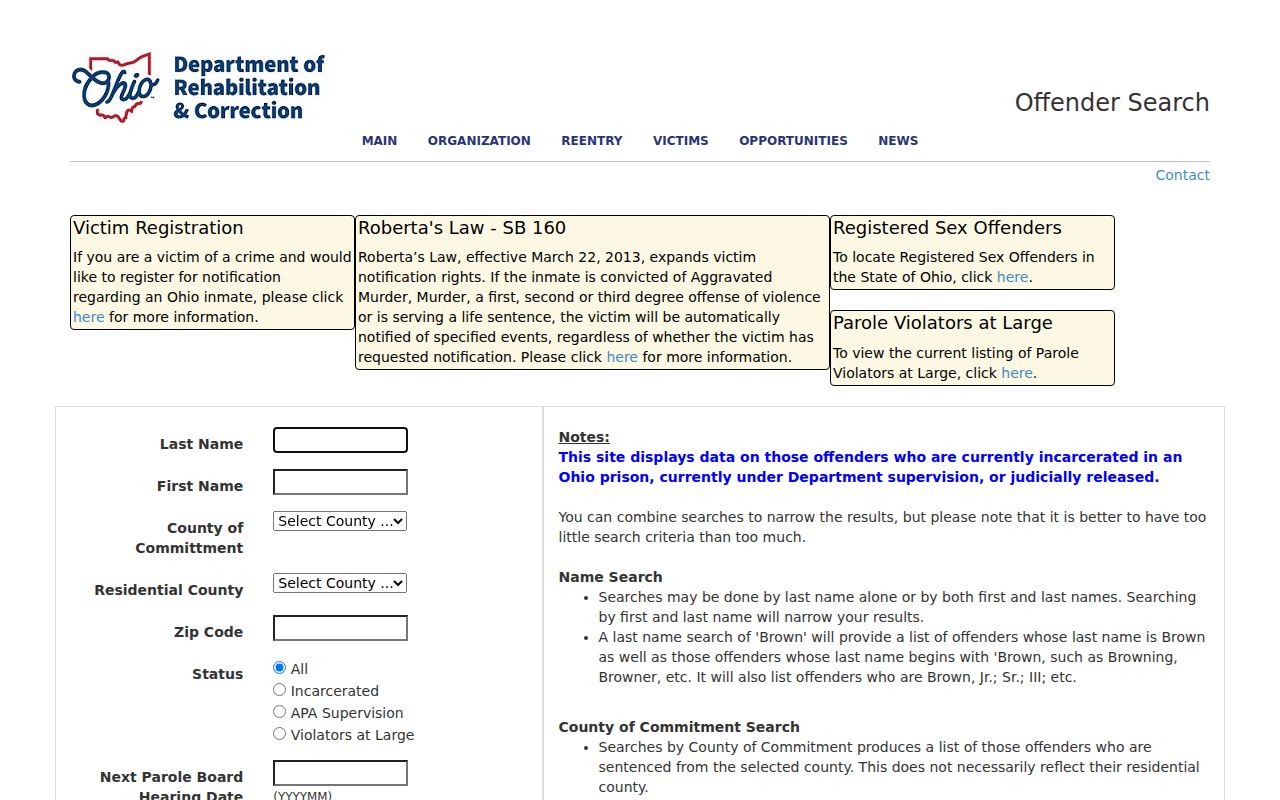
The state search is useful only within its defined public-safety context and should not be treated as a general locator.