
Previous Springfield Residents by Era
Address history in Springfield uses different custodians for different periods. The current parcel gives a lead into recorded instruments. Directory and census material brings the household layer into view. Maps explain whether the physical place still aligns with the old address. Probate and obituary work can close a documented family trail. Each source has limits, so the dates in a research note should identify the source as well as the event being considered.
| Source | Years It Covers | Where Held | What It Shows |
|---|---|---|---|
| Springfield Recorder online index | Online start year not verified | Clark County Recorder portal | Returned party and instrument leads |
| Springfield Recorder books and instruments | Exact historic range not posted | Clark County Recorder office | Older grantor, grantee, deed, plat, and book/page route |
| Springfield directories | 1852–2020 | Springfield Heritage Center | Periodic household or business address trail |
| Springfield CCPL deed microfilm and index | Microfilm 1818–1901; index 1818–1968 | Clark County Public Library | Early grantor/grantee and deed-book bridge |
| Springfield local census microfilm | 1820–1930 at CCPL | Clark County Public Library | Household composition and period context |
| Springfield Sanborn map volume | 1928, republished 1955 | Library of Congress | Lot, building, and street context, not occupants |
Use the date nearest the Springfield question. A recent Springfield ownership transfer starts with the Auditor and Recorder. An older Springfield house often needs a directory volume, a map, and the library’s deed material before the Recorder counter route becomes clear.
Springfield Deed Records Backward
The Springfield property chain in Clark County begins with the Clark County Auditor Property Search for Springfield parcels. Use the Springfield address, parcel, owner, or other available property criteria to locate the parcel lead. Preserve the parcel number and legal description before moving to the Clark County Recorder advanced search. A legal description is the lot, subdivision, or other written land identifier in an instrument. It is more stable than a Springfield street address when numbering, subdivision, or street names have changed.
- Locate the current Springfield parcel and copy the parcel number, legal description, and a current owner field without assuming the mailing address proves occupancy.
- Use the Recorder’s Party Names, Grantor, Grantee, date, document-type, book, volume, page, or document-number fields to locate the transfer into that owner.
- Record the seller, recording date, instrument reference, and legal-description words, then search that seller as a grantee to find the earlier Springfield acquisition.
- Repeat the comparison for each prior transfer, checking lot, block, subdivision, and legal-description details to avoid a same-name error.
- When the Springfield online trail stops, take the known book/page or document details to the Recorder or Tax Map staff and request the older index or book route.
- Grantor
- The party transferring an interest in a recorded instrument.
- Grantee
- The party receiving that interest. A prior owner can become the next grantee when the chain is read backward.
- Chain of title
- The ordered sequence of recorded transfers for the same parcel or legal description.
- Legal description
- The land description in a recorded instrument, used to join old records when a street address is uncertain.
The Recorder advanced-search page is the first online instrument step.
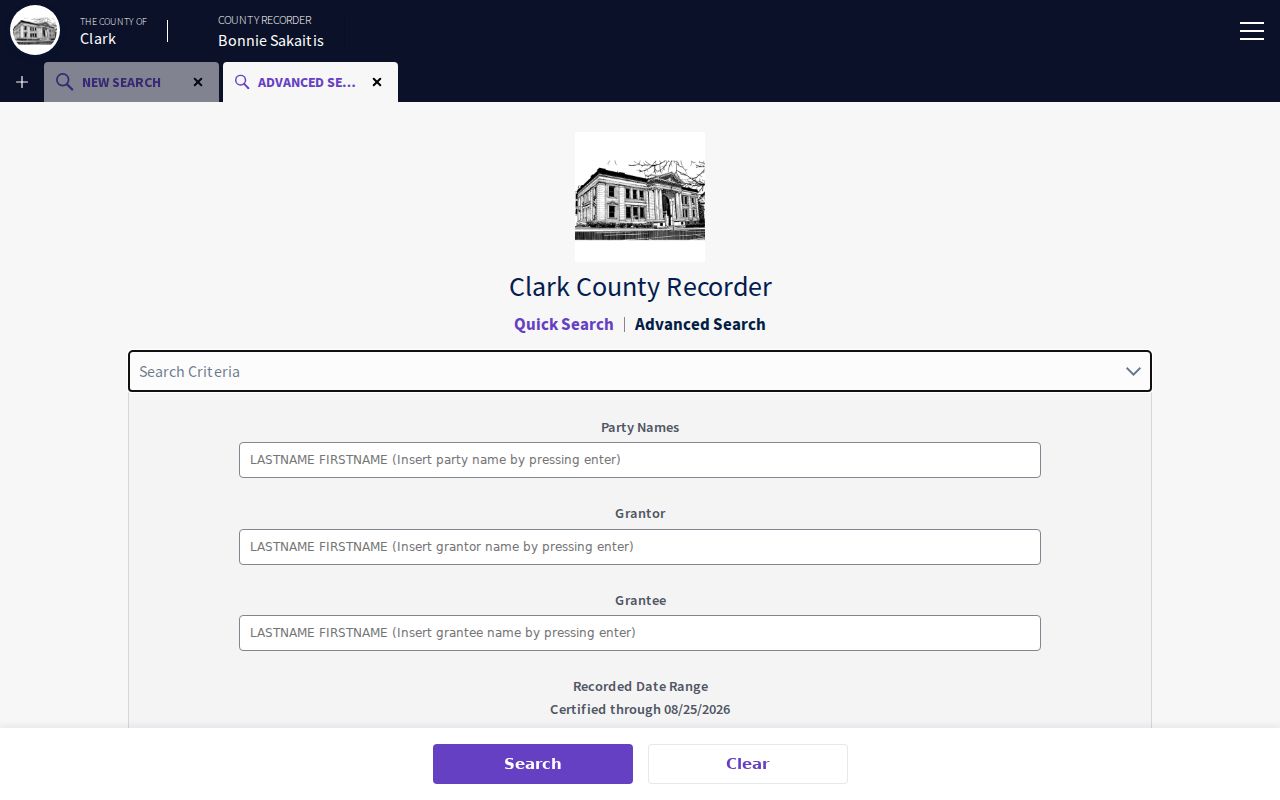
The form separates grantor and grantee roles and includes an OCR field. OCR treats several words as a phrase, while index-only search splits several words individually, so try a careful variant when a narrow phrase misses.
Springfield Recorder Search Limits
The Springfield Recorder’s live screen gives a certified-through status, but official research did not locate the first online-index year. It is therefore unsafe to call the web portal an all-years deed index or to assign it an invented cutoff. Use the returned modern portion for party, document, book, and OCR leads. Then call the Springfield Recorder about earlier grantor/grantee books or images when a relevant transfer is not returned.
The strongest Springfield fallback is layered. Springfield CCPL has deed microfilm for 1818 through 1901 and a deed index for 1818 through 1968. Heritage Center’s inventory also identifies a Springfield grantor/grantee deed-index collection dated 1811–1870. The Springfield Recorder office and the library fill different portions of the trail, so a missing online result is a cue to switch channels, not a reason to declare the record absent.
Note: Keep the search scope in the notes, because an online omission can reflect index coverage, a spelling issue, or a document that requires counter research.
Springfield Deed Records at CCPL
Clark County Public Library is the key bridge for early Springfield property research. Its Springfield local-history resources point to city directories, early deeds and mortgages, Recorder, and Auditor sources, while its holdings include the 1818–1901 deed microfilm and 1818–1968 grantor/grantee index. These tools can narrow a Springfield historical transfer before an in-person Recorder inquiry or a Heritage Center catalog request.
Do not merge the ownership trail with the household trail. A recorded deed identifies parties to an instrument, not everyone living at the property. After a deed date is identified, select a nearby directory volume or census source and compare the house number, street name, and listed household evidence. That next layer is summarized on the Springfield directory book.
Historic Maps for Springfield Addresses
Maps test the Springfield place before names are joined to it. Clark County Tax Map keeps old road records, historical surveys, plats, and archived tax maps from 1880 through 2002. Staff also review deeds, legal descriptions, surveys, annexations, condominium plats, and subdivisions. When a Springfield directory number does not resolve in a current parcel search, ask whether a plat, road record, annexation, street rename, or address-system change affects the match.
The Library of Congress Springfield Sanborn volume is from 1928 and was republished in 1955, with 75 sheets. A Sanborn sheet can show building footprints, materials, land use, and street layout. It cannot identify occupants. Use it to test the structure or lot context, then return to directory, parcel, and deed sources for names.
The Clark County Tax Map Department is the counter route for a legal map question.
The Clark County Clerk of Courts information page describes the separate county court access route.
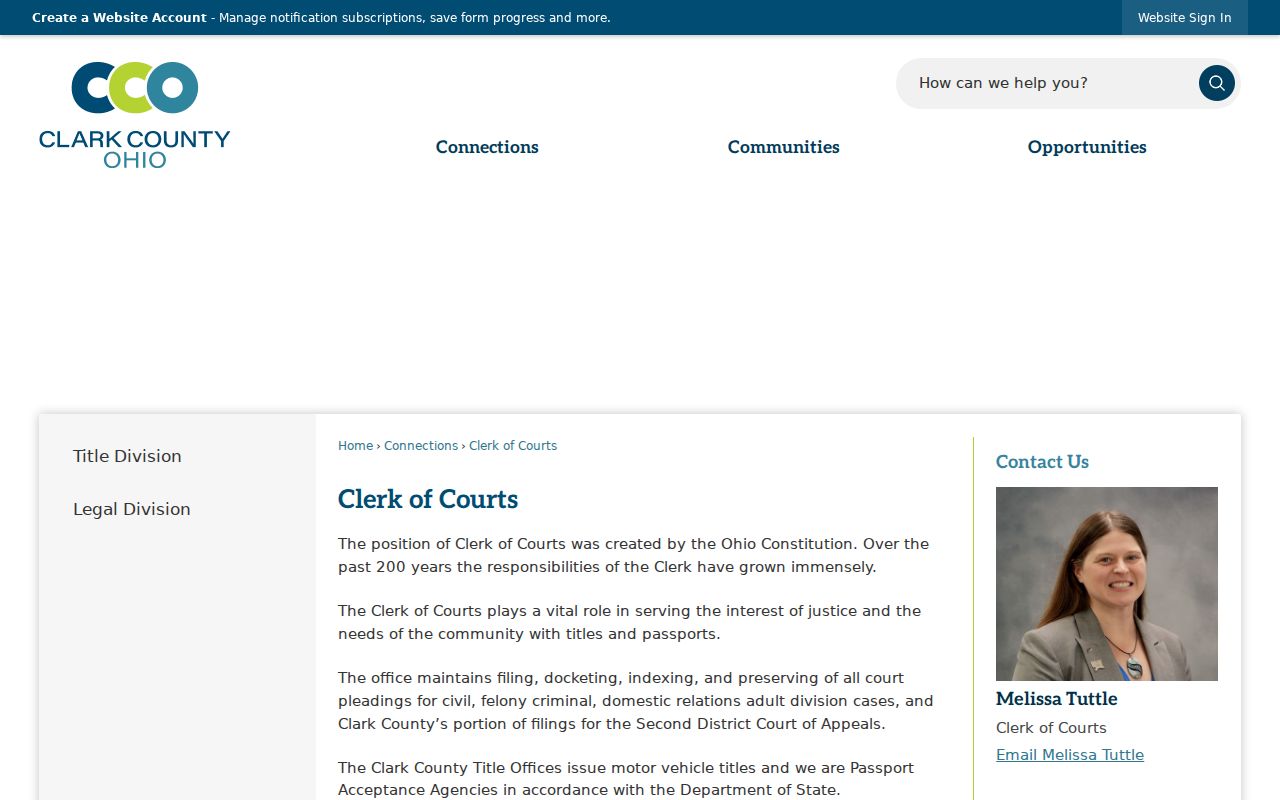
A court page may provide an additional case trail tied to parties, but it does not replace parcel and land-record research. Clark County says Common Pleas web records before 1990 are not available in its web system.
Past Springfield Households in Context
Previous residents require household evidence after the ownership trail is set. Heritage Center holds Springfield directories from 1852 through 2020, and the Library District has online PDFs for 1901 through 1920. In an edition with a street-and-dwelling-number list, begin with the address and record the listed name. In other editions, start with the surname list and keep the address and occupation as separate fields. CCPL identifies Dickman Criss-Cross volumes for selected years, including 1976 to the present.
Pair the Springfield directory year with the closest census period held locally. CCPL has Clark County census microfilm from 1820 through 1930. Federal census releases now reach 1950 under the 72-year rule. A Springfield directory gap does not establish a departure, and the listed name may be an owner, a household member, or another entry type depending on the volume. The 1928/1955 Sanborn map can test physical continuity between the directory and the parcel.
Lawful use. Springfield house-history research is appropriate for family history, estate documentation, and personal curiosity. Public records do not permit stalking, harassment, or unwanted tracking of a living person.
Former Street Names for Springfield
Heritage Center has a dedicated Springfield and Clark County street-name-change collection. Its 1961 compilation links Yellow Springs Street with Plum and records earlier Main and Champion references for Columbia Street. That is a useful map bridge when a historic volume uses an unfamiliar label. It is not a license to match addresses by name alone.
Compare the former Springfield label with a dated map, road record, plat, and legal description. The county’s Tax Map material and the Springfield archive’s street-name collection are stronger than forcing an old number into a present map. A current county GIS view of Springfield is also an orientation tool, not a legal survey.
Springfield Probate Trail Endpoints
Springfield Probate, obituary, death, and census material can close an address-history trail without pretending to prove a current residence. Probate dates estate microfilm from 1818 through 1985 and scanned additional estate images from 1985 forward. Original early estate files are at the Historical Society. A Springfield death certificate or obituary may lead to an estate docket, fiduciary, or recorded transfer, but each connection should be supported by names, dates, and parcel facts.
Clark County Public Library’s Springfield-paper obituary index runs from 1918 to the present. Its library staff can perform core indexed lookups when a person and date are supplied. For an official vital-copy request, the Clark County Combined Health District records page provides the local public-records channel, while birth abstracts and Clark County death certificates have their own request information.
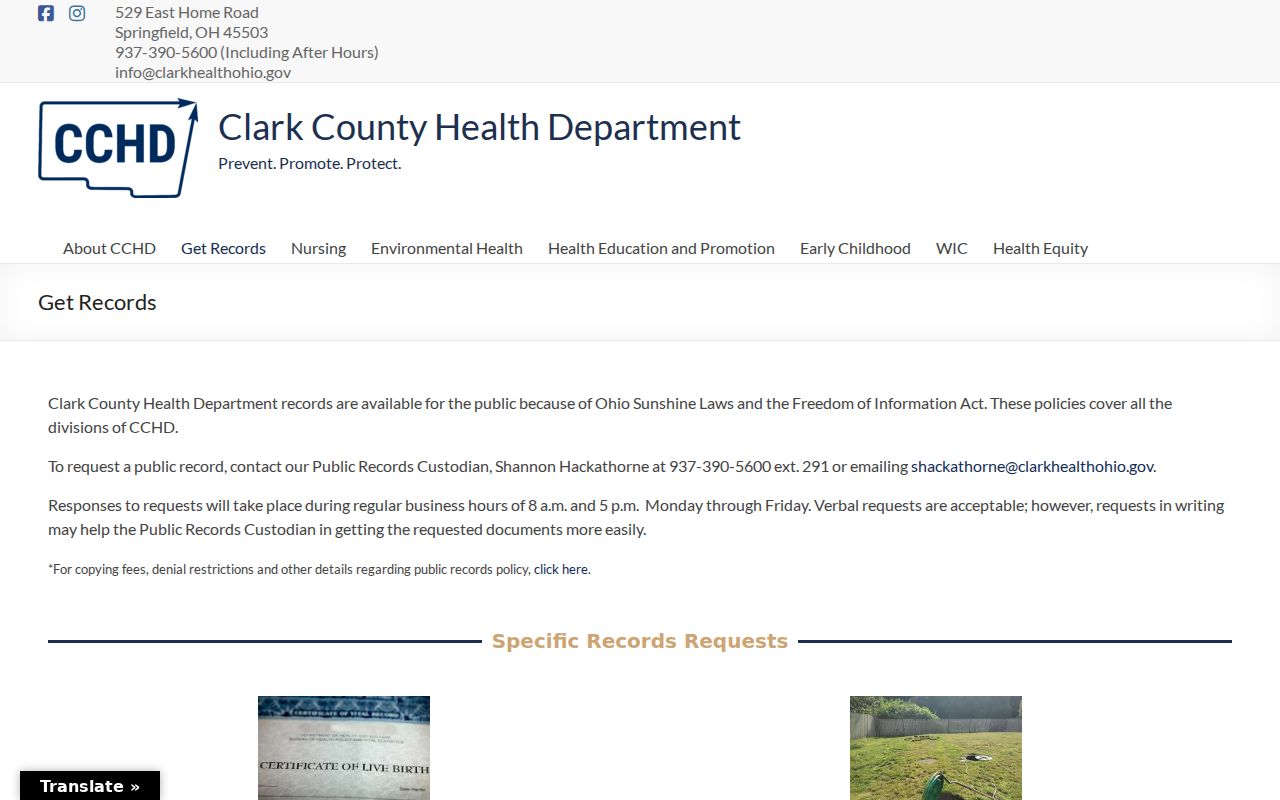
Vital material is an endpoint or cross-check. It should not be treated as a general address search, and statutory exceptions and redactions still apply.
Springfield Court Records Along the Trail
Some Springfield address histories include litigation, an estate dispute, or another court filing, but a court index is a separate record path. The Clark County Clerk of Courts keeps Common Pleas civil, felony-criminal, domestic-relations, and Second District appeal filings. Marriage licenses and estates are Probate Court functions. A Springfield county web result can lag or omit earlier material, so the clerk or court is the verification channel when a filing matters.
When a documented reference points to a federal case, the official PACER federal court access page is a separate source. It is not a shortcut to a property chain or a household list.
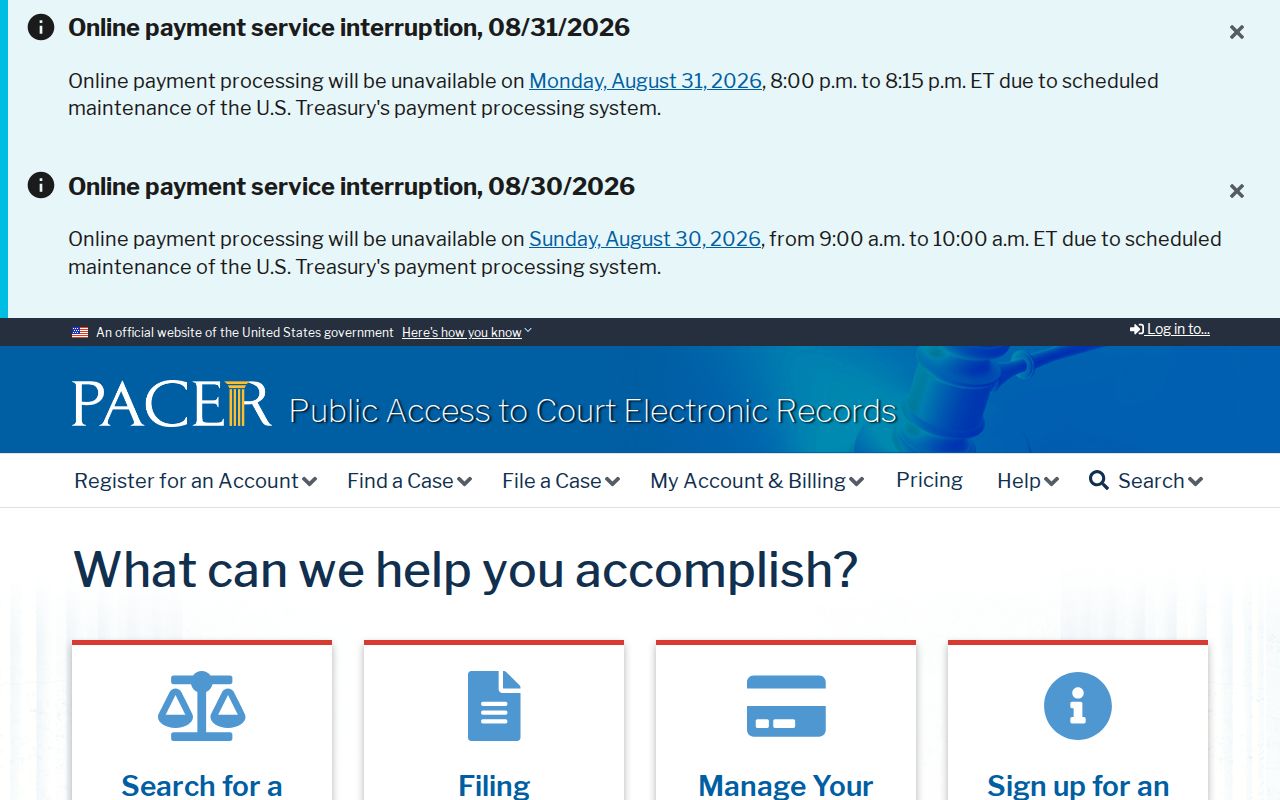
Keep a federal case number, court, and date apart from local deed and directory notes. The records answer different historical questions.